
Last updated September 24, 2026
Free in-home measure and quote - PGT, CGI and CWS impact lines compared on your actual openings, style by style
 Before
 After
After Before
 After
After Before
 After
AfterWindows & Doors Warning Signs: A Opa-locka Homeowner’s Reference Guide
Condensation between impact glass panes looks like a seal failure but is sometimes a pressure-equalization artifact in the first 12 months. Misdiagnosing it triggers a replacement claim for a window that doesn’t need replacing, while the actual failure mode, sill water intrusion, goes undetected. In this guide, we’ll separate cosmetic issues from structural failures, assign rough remediation timelines to each category, and explain which signs are reportable to your insurance carrier versus which are simple maintenance items. Every warning sign covered here is one we’ve documented in Opa-locka homes during measured surveys since 2012.
Quick Answer
Windows and doors in Opa-locka show five categories of warning signs: glass seal failures (fogging between panes), frame degradation (corner separation, sealant failure), operational failure (sticking, misalignment, hardware fatigue), water intrusion (staining, sill rot, subfloor damage), and impact-glass compromise (chips, cracks, spider patterns). Cosmetic issues like surface sealant weathering or interior condensation from HVAC delta-T can wait for scheduled maintenance. Structural issues like corner key bond failure, active water infiltration, or impact-glass breaches require documented assessment within 30 days and may trigger insurance reporting requirements under Florida windstorm provisions.
Table of Contents
- Glass Seal Failures: IGU Fogging vs. Condensation Misdiagnosis
- Frame Degradation: South Florida Heat and Corner Separation
- Door Misalignment Taxonomy: Four Failure Modes with Different Signatures
- Water Intrusion: Sealant Patterns, Sill Rot, and Subfloor Damage
- Impact-Glass Compromise: Miami-Dade Product Approval and Field Repair Rules
- HVAC-Related Condensation: Interior Surface Moisture vs. Seal Failure
- Maintenance Items vs. Structural Failures: A Decision Framework
- Insurance Reporting: What to Document and When
 Before
 After
AfterGlass Seal Failures: IGU Fogging vs. Condensation Misdiagnosis
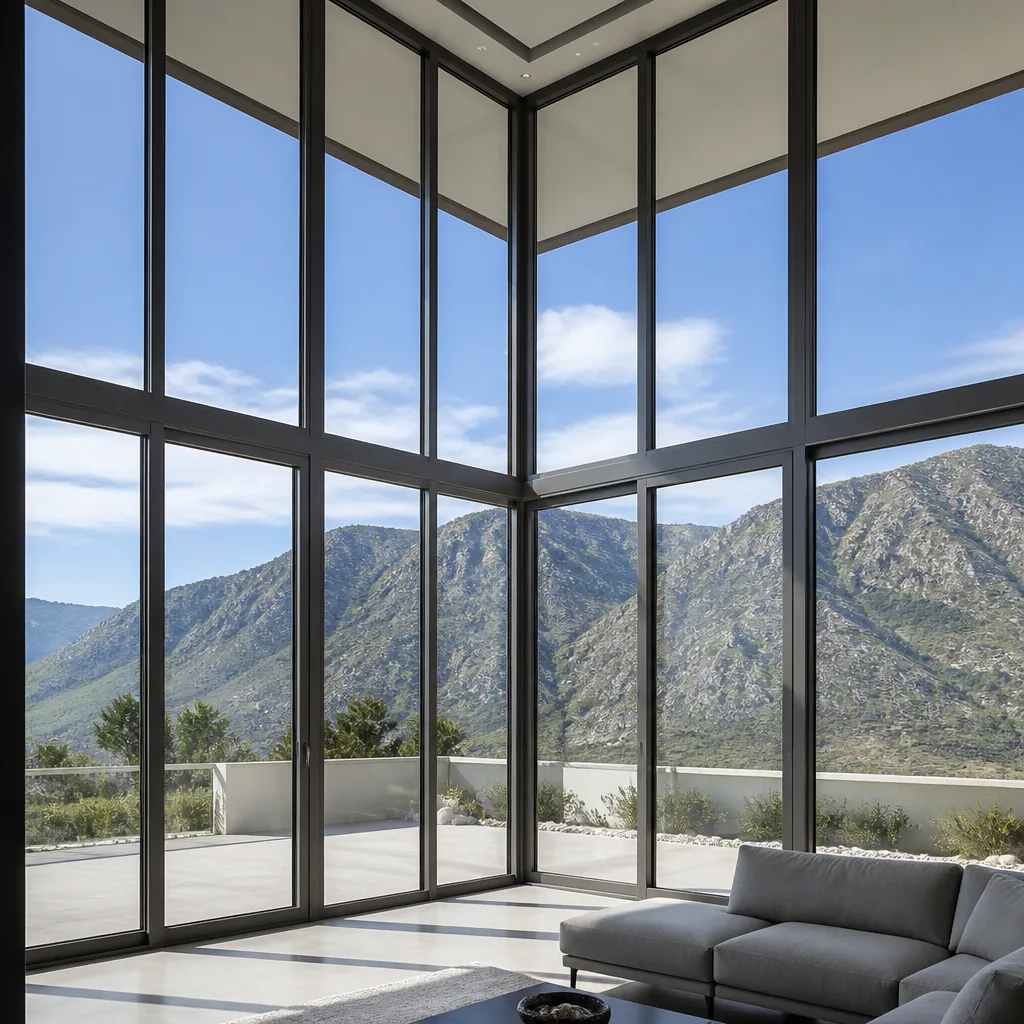
The insulating glass unit, or IGU, is the sealed sandwich of glass, spacer, and desiccant that makes modern windows thermally efficient. When moisture appears between the panes, the standard assumption is seal failure. That assumption costs Opa-locka homeowners unnecessary replacements every year.
Here’s what we’ve found in our measured surveys since 2012. New impact-rated IGUs, particularly from manufacturers like CWS and ES Windows, can exhibit temporary fogging in months 2 through 12 as the unit equalizes to local barometric pressure and humidity. This pressure-equalization artifact clears within 24 to 72 hours and does not recur. True seal failure produces persistent fogging that worsens over weeks, eventually leaving mineral deposits on the interior glass surfaces that cannot be wiped away.
The diagnostic sequence we use:
- Photograph the fogging with date and time stamp.
- Record outdoor temperature, humidity, and recent weather pattern.
- Mark the fogged area with painter’s tape and monitor for 72 hours.
- If clearing occurs, note the conditions and schedule recheck at next seasonal extreme.
- If persistent, measure the sightline distortion through the fogged zone; seal failure often creates visible waviness.
True IGU seal failure in Opa-locka’s climate accelerates when the desiccant saturates and the spacer corrodes. The failure timeline from first fogging to permanent mineral staining is typically 90 to 180 days in our humidity. After that point, the thermal performance is compromised and the unit must be replaced. Under Miami-Dade product approval standards, IGU replacement in impact-rated windows requires matching the original interlayer specification and frame certification; swapping in a non-approved IGU voids the assembly’s hurricane rating.
We document every IGU assessment with the measured survey the customer keeps, the photo record of the fogging pattern, and the written scope if replacement is indicated. Haven Clause 1: the written price before any work starts comes from that survey, not from a phone estimate.
Frame Degradation: South Florida Heat and Corner Separation
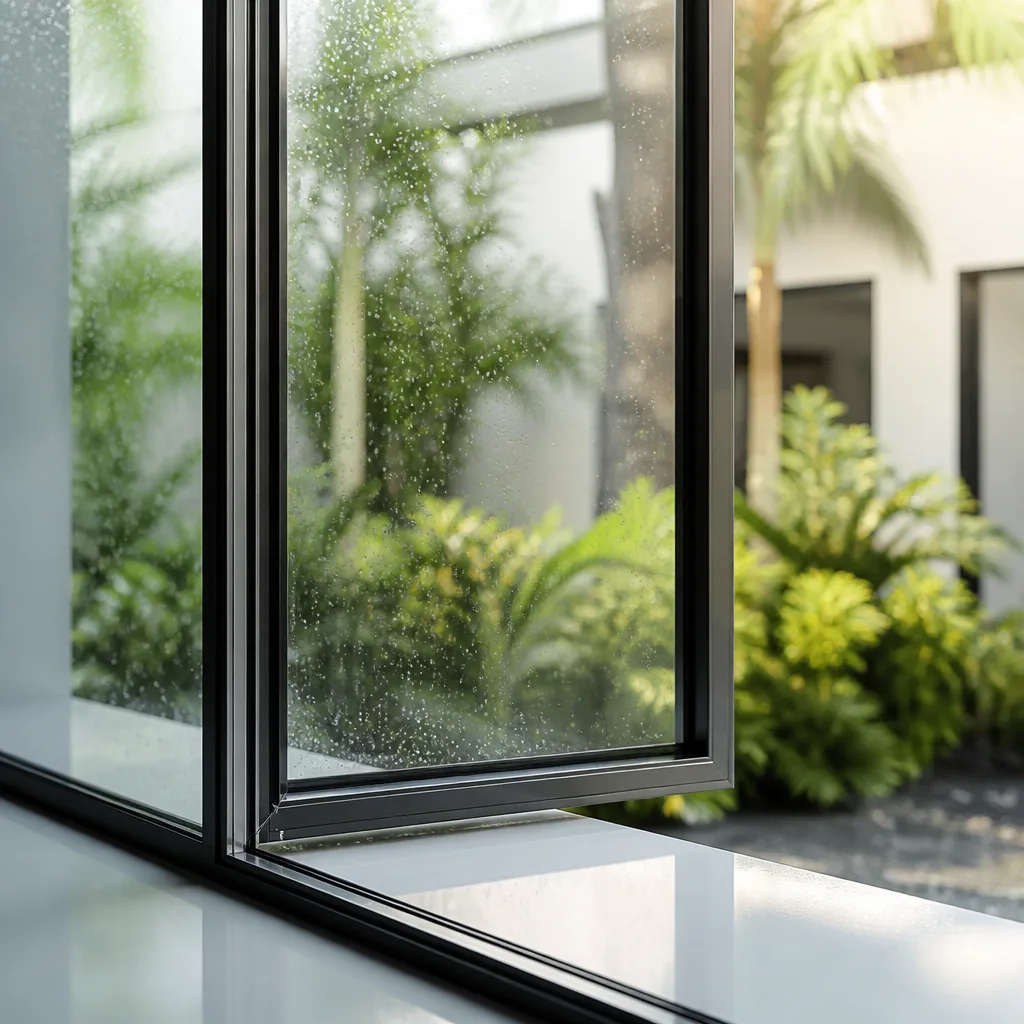
Aluminum window frames expand approximately 0.0000123 inches per inch per degree Fahrenheit. In Opa-locka’s summer cycle, a 96-inch frame can grow 1/8 inch from morning to afternoon. This expansion is designed into the frame. The problem is distinguishing normal thermal movement from structural corner key failure.
Corner keys are the mechanical or bonded joints where frame extrusions meet. In quality frames from manufacturers like PGT and CGI, corner keys are reinforced with mechanical interlocks and structural adhesive. In lower-tier products, the corner key may be a simple friction fit that loosens over thermal cycles.
Cosmetic aluminum expansion shows these signs:
- Hairline gap at the corner that closes when the frame cools (evening or morning check).
- No visible deformation of the corner key itself.
- Continued smooth operation of the sash.
- No daylight visible through the gap when the sash is closed.
Structural bond failure shows these signs:
- Gap that persists across temperature cycles.
- Visible deformation, cracking, or separation of the corner key material.
- Sash operation becomes rough or the sash drops when opened.
- Daylight visible through the corner when the sash is closed and locked.
- Water staining on the interior frame face below the corner.
In Opa-locka’s inland position, we see accelerated corner key fatigue in west-facing elevations where afternoon radiant heat peaks before the daily thunderstorm cooling. Homes in the Magnolia North and Rainbow Heights areas, with their 1950s through 1980s construction stock, often have original aluminum windows that have undergone 40+ years of thermal cycling. We’ve measured corner separation in these units that exceeds 3/16 inch, at which point the frame’s structural integrity and water management are compromised.
The remediation timeline: cosmetic expansion requires monitoring at seasonal extremes, with recaulking of the frame-to-wall joint as routine maintenance. Structural corner failure requires frame replacement or, if the manufacturer still produces the extrusion, a field corner rebuild with new keys and structural adhesive. The latter is a specialized repair; most Opa-locka homeowners find that full window replacement is more cost-effective when labor and warranty are factored.
Door Misalignment Taxonomy: Four Failure Modes with Different Visual Signatures
A sticking door is not a single problem. In our Opa-locka surveys, we’ve identified four distinct failure modes, each with its own cause, progression, and remediation. Misdiagnosing the mode leads to wrong repairs and recurring problems.
Slab Warp
The door panel itself has twisted, typically from moisture absorption in solid-core wood doors or from manufacturing stress in fiberglass units. Visual signature: the door contacts the frame at one corner but gaps at the diagonally opposite corner. The hinge side remains plumb. Remediation: slab replacement. Field correction by planing the edge compromises fire rating and weatherstrip compression.
Hinge Wear
The hinge barrel or knuckle has elongated from load and cycle stress. Visual signature: the door sags progressively from top hinge to bottom hinge; lifting the handle side corrects the gap. The frame remains square. Remediation: hinge replacement with proper screw length into structural framing, not just jamb stock. In Opa-locka’s humidity, we’ve seen hinge screws pull out of moisture-softened jamb material; the fix requires longer screws into the king stud or structural insert.
Frame Shift
The door jamb has moved within the rough opening, typically from fastener failure or inadequate shimming at installation. Visual signature: consistent gap change across the entire door height, with the strike side either binding or showing excessive clearance. The slab itself is flat. Remediation: frame removal and reinstallation with proper shimming and fastening to structural members. This is common in door replacement work where the original installer used finish nails instead of structural screws.
Foundation Movement
The structural slab or footing has moved, transferring displacement to the frame. Visual signature: multiple doors in the home show similar misalignment patterns; drywall cracks radiate from the door header; exterior stucco shows step cracking. The door frame is square to itself but not to the world. Remediation: structural assessment first, then door adjustment after stabilization. In Opa-locka’s areas with organic soils or former wetland fill, we’ve seen seasonal foundation movement of 1/4 inch or more.
The diagnostic protocol: before quoting any door work, we measure the frame for plumb, level, and square; check the slab for warp using a straightedge; inspect hinge condition and fastener engagement; and survey adjacent doors for pattern correlation. The measured survey documents all four checks, and the written scope addresses the actual failure mode.
Water Intrusion: Sealant Patterns, Sill Rot, and Subfloor Damage
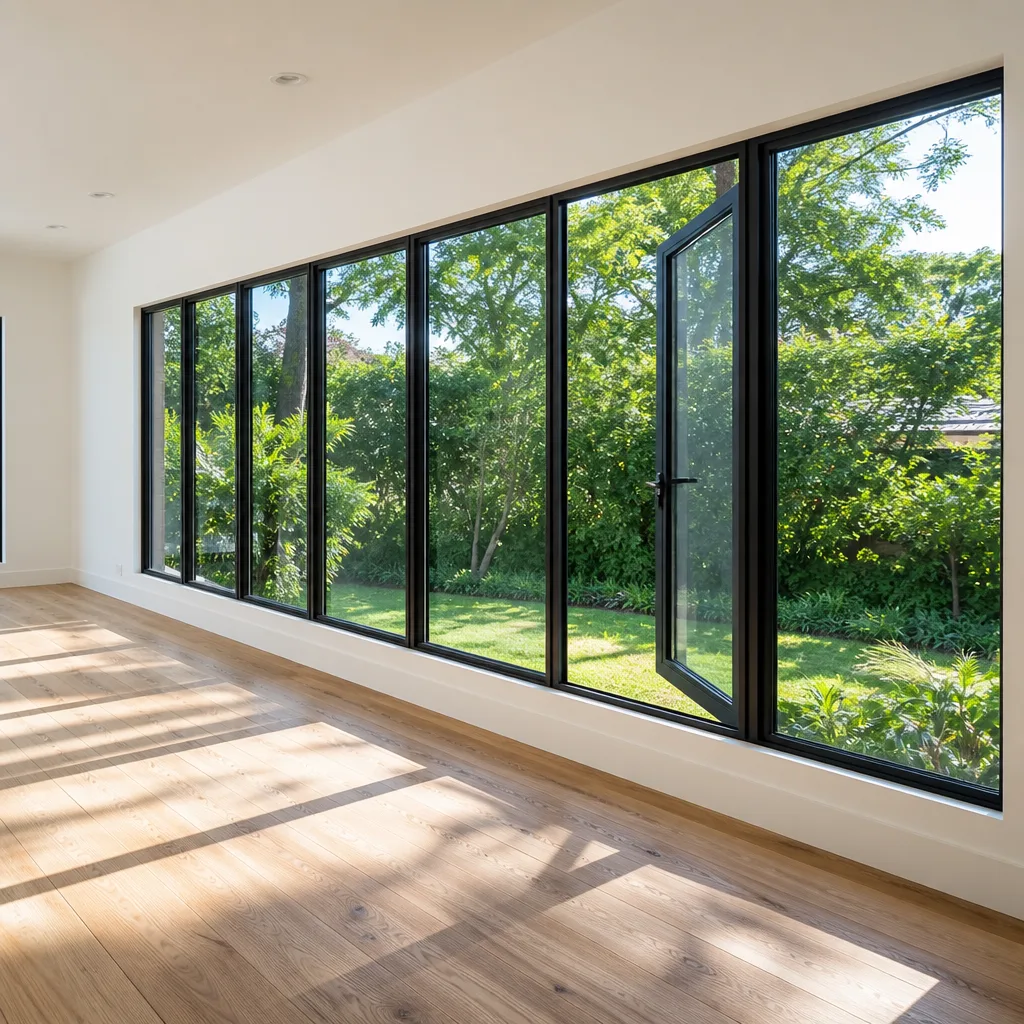
Water is the most expensive damage vector in South Florida windows and doors, and the most misread. The critical distinction is between sealant that has weathered on the surface and sealant that has cracked through to create an active infiltration path.
Surface weathering shows:
- Chalky residue on the sealant face, common with polyurethane formulations after 3 to 5 years of UV exposure.
- Cracks limited to the outer 1/16 inch of sealant depth.
- Dry substrate behind a probe insertion.
- No interior staining or moisture detection.
Active infiltration shows:
- Cracks penetrating full sealant depth to the substrate.
- Soft or discolored substrate when probed.
- Interior water staining, typically at the sill or lower jamb.
- Musty odor or elevated moisture meter readings in adjacent wall cavity.
- Paint bubbling or drywall softening on the interior wall face.
In Opa-locka, we see a specific pattern in homes with original or replaced windows from the 2004-2006 post-hurricane building boom. The sealant used in that period was often a lower-modulus silicone that performed adequately for 8 to 12 years but has now aged past its service life. The failure typically begins at the sill-to-frame corner, where ponding water from afternoon thunderstorms concentrates. By the time interior staining appears, the sill framing has often absorbed enough moisture to begin fungal degradation.
The remediation timeline matters for insurance purposes. Active infiltration documented with moisture meter readings and thermal imaging should be reported within 14 days of discovery under most Florida homeowners policies. Surface weathering can be scheduled for routine recaulking, typically a 2 to 3 hour job for an average opening with proper joint preparation and backer rod installation.
We document water intrusion assessments with the photo record standard on every Sightline visit: exterior sealant condition, probe test results, moisture meter readings at multiple depths, and interior finish condition. The customer receives this documentation whether or not they proceed with repair.
Impact-Glass Compromise: Miami-Dade Product Approval and Field Repair Rules
Impact-rated glass in Opa-locka is not ordinary glass with a film applied. It is a laminated assembly of glass, polyvinyl butyral (PVB) or ionoplast interlayer, and a second glass lite, tested as a complete system under Miami-Dade County Protocol TAS 201, 202, and 203. This distinction governs what can be repaired in the field and what requires full replacement.
Miami-Dade product approval rules are specific:
- Chips in the exterior glass lite that do not penetrate to the interlayer may be ground and filled with optical resin if the repair is performed by a technician trained to the manufacturer’s specification and the repair is documented with before-and-after photography.
- Cracks that reach the interlayer, spider patterns, or any damage to the interior lite require full glass replacement.
- Replacement glass must match the original approval listing for interlayer type, thickness, and frame compatibility.
- Field repairs not performed to manufacturer specification void the product approval and may invalidate insurance coverage for windstorm damage.
The practical assessment we use in Opa-locka:
First, determine if the damage is in the exterior lite, interior lite, or both. A penlight held at an angle will reveal interlayer exposure as a distinct layer between the glass fractures. Second, measure the damage dimensions; chips under 1 inch in diameter and 1/8 inch in depth that do not reach the interlayer are candidates for repair. Third, identify the original manufacturer and product approval number, typically etched in the glass corner or recorded in the permit documentation.
We see frequent misdiagnosis in Opa-locka’s newer construction, particularly in the Gardens of Magnolia area, where homeowners mistake impact-glass chips from landscaping debris for seal failures because the damage creates a foggy appearance at the fracture edge. The correct diagnosis is glass damage, not seal failure, and the remediation is glass replacement, not IGU replacement. The cost difference is substantial: field chip repair runs $150 to $300, glass replacement $800 to $2,400 depending on size and frame system, while unnecessary full window replacement can exceed $4,000.
Sightline’s product lines from ECO Window Systems and Mr-Glass carry current Miami-Dade approvals with documented interlayer specifications. When we replace impact glass, the new unit’s approval documentation is included in the customer’s file.
HVAC-Related Condensation: Interior Surface Moisture vs. Seal Failure
Not all window moisture is a window problem. In Opa-locka’s cooling-dominant climate, interior glass surface condensation is frequently an HVAC delta-T issue masquerading as window failure.
The physics: when the interior glass surface temperature drops below the dew point of the interior air, moisture condenses. In summer, this occurs when overcooled air strikes the glass directly, or when the glass is the coldest surface in the room. In winter, the reverse can occur with heating patterns. The critical diagnostic is location: interior surface condensation forms on the room-side glass face and can be wiped away. IGU seal failure fogging is between the panes and cannot be wiped.
HVAC-related condensation patterns we’ve documented in Opa-locka:
- Condensation on the lower sash only, where supply air from floor registers strikes the glass directly. Common in homes with 14 SEER or higher systems that produce colder discharge air.
- Condensation on north-facing windows only, where glass temperature remains lower through the day.
- Condensation that appears only when the thermostat is set below 72 degrees and clears when raised to 75.
- Condensation that correlates with extended cooking or showering without exhaust fan operation, raising interior humidity above 60%.
The remediation is HVAC and humidity management, not window replacement. Redirecting supply registers, raising thermostat setpoint by 2 degrees, or adding a whole-home dehumidifier typically resolves the issue. We’ve surveyed homes in Opa-locka where the previous contractor had quoted $15,000 in window replacement for a problem solved with $200 in register deflectors.
However, persistent interior condensation can damage window components over time. Water pooling on the sill can degrade finish coatings, and repeated wet-dry cycling can swell wood components. If interior condensation has been occurring for more than one season, we inspect the sill and jamb for secondary damage during our measured survey.
Maintenance Items vs. Structural Failures: A Decision Framework
Every warning sign falls into one of two categories with different timelines, costs, and urgency levels. This framework is what we use when prioritizing work for Opa-locka homeowners.
| Category | Examples | Timeline | Typical Cost Range | Insurance Relevance |
|---|---|---|---|---|
| Maintenance | Surface sealant weathering; hardware lubrication; screen repair; interior condensation management; cosmetic frame chalking | Schedule within 90 days or next service interval | $75 - $400 per opening | Not reportable |
| Structural | IGU seal failure; corner key bond failure; active water infiltration; impact-glass interlayer breach; frame-to-wall separation exceeding 1/4 inch; sill rot with structural compromise | Assess within 14 days; repair within 30 days | $800 - $4,500 per opening | Reportable if sudden and accidental; documented pre-existing damage may be excluded |
The decision protocol:
- Identify the primary symptom using the categories in this guide.
- Determine if the issue is progressive (worsening over days or weeks) or stable (unchanged over months).
- Check for secondary damage: interior finishes, adjacent structure, air quality indicators.
- Document with dated photographs and, for moisture issues, meter readings.
- If structural and progressive, schedule professional assessment within 14 days.
- If maintenance and stable, schedule at next convenient interval with monitoring notes.
In Opa-locka’s market, we’ve found that homeowners who maintain a simple log of window and door conditions, updated seasonally, can identify progression early and avoid emergency replacement costs. The log should note date, condition, photograph reference, and any change from previous observation.
Insurance Reporting: What to Document and When
Florida homeowners insurance covers sudden and accidental damage, not maintenance or wear. The distinction determines whether a window or door issue triggers coverage or is excluded.
Reportable events typically include:
- Impact damage from wind-borne debris during a named storm or severe weather event, documented with date and weather service record.
- Sudden glass failure from thermal stress, documented with temperature data and failure pattern analysis.
- Water damage from failed sealant or flashing during a specific storm event, with before-and-after documentation showing the failure was not pre-existing.
Non-reportable conditions typically include:
- Gradual sealant degradation from age and UV exposure.
- IGU seal failure from normal service life expiration.
- Hardware wear from operational cycles.
- Frame corrosion from atmospheric exposure over years.
The documentation standard for insurance reporting: dated photographs of the damage, the surrounding undamaged condition, and the interior effect; a written narrative of when the damage was discovered and what event preceded it; and a professional assessment identifying the failure mode and required remediation. Sightline provides this documentation as part of our standard measured survey and photo record on every visit.
One Opa-locka-specific consideration: homes in the historic district or with Miami-Dade County historic designation may have additional requirements for replacement materials and methods. Insurance carriers may require documentation that replacement windows match the original sightlines and operation types. We maintain records of approved replacement products for common Opa-locka historic housing types.
Common Mistakes to Avoid
- Assuming all fogging is seal failure. In Opa-locka’s first-year installations, pressure-equalization artifacts are common and self-resolving. Replacing a functioning IGU wastes money and may void the original warranty.
- Ignoring corner separation as “just expansion.” We’ve surveyed homes where homeowners watched corner gaps grow for three years, assuming thermal movement, while water infiltration destroyed the sill framing and adjacent drywall.
- Planing a warped door instead of replacing it. Removing material from a fire-rated or impact-rated door compromises its certification and may violate code. The correct fix is slab replacement with proper specification.
- Recaulking over active infiltration without substrate repair. New sealant on wet, degraded framing fails within months. The proper sequence is dry-out, substrate repair, then sealant installation with proper joint design.
- Failing to document pre-existing conditions before storm season. Insurance adjusters compare post-storm damage to pre-storm condition. Photographs taken in May can support claims filed in October.
- Accepting verbal warranties without written terms. Haven Clause 1 requires written documentation; any contractor offering only verbal assurance should be declined.
When to Call a Professional
Call for documented assessment when you observe persistent fogging between panes, corner gaps that don’t close with temperature change, doors that require force to operate, water staining on interior finishes, or any impact-glass damage that reaches the interlayer. These signs indicate structural issues that progress and may affect insurance coverage.
Sightline Windows & Doors Opa-locka offers free estimates in Opa-locka. Every estimate begins with the measured survey you keep, and the written price before any work starts is the same document. Call (786) 671-8642 to schedule. For competitor quotes, we provide a free second opinion review at no charge.
Frequently Asked Questions
IGU seal failure requires glass unit replacement, not repair, at $400 to $1,200 per unit depending on size, impact rating, and frame system. Surface sealant recaulking runs $150 to $350 per opening. Call (786) 671-8642 for an exact quote; estimates are free.
No. Haven Clause 1 states that the measured survey and the written quote are the same document. The price on the page is the price on the invoice. If concealed damage is found after work begins, we document it, stop work, and present a revised scope with a new written price before continuing. No surprises.
Yes. Every window and door replacement in Opa-locka requires Miami-Dade County building permit and inspection. We pull permits, schedule inspections, and provide the passed inspection documentation. This is included in our standard scope, not an additional charge.
Typical replacement of 10 to 15 windows in an Opa-locka home requires 2 to 3 days of installation after permit approval, which runs 10 to 15 business days in Miami-Dade County. Custom or impact-rated products may add 4 to 8 weeks to material lead time. We provide a written schedule with the quote.
Exterior lite chips that don’t reach the interlayer may be repaired with optical resin by a manufacturer-trained technician. Any crack reaching the interlayer, spider pattern, or interior lite damage requires full glass replacement to maintain Miami-Dade product approval. We assess and document which category applies during our survey.
In the first 12 months, pressure-equalization artifacts can cause temporary fogging in new impact-rated IGUs, particularly in Opa-locka’s humidity and barometric variation. This typically clears in 24 to 72 hours and does not recur. Persistent fogging that worsens over weeks indicates true seal failure and requires replacement. We document the pattern to distinguish the two during our assessment.
The Bottom Line

Window and door warning signs in Opa-locka require systematic diagnosis, not assumption. Separate cosmetic issues from structural failures, distinguish temporary condensation from seal degradation, and identify the specific failure mode before committing to remediation. Document everything with dated photographs and professional assessment. The measured survey you keep, the written price before work starts, and the photo record when the job is done are your protection against misdiagnosis and unnecessary cost. These are the standards we’ve applied to 18,000+ openings since 2012, governed by the Haven Standard on every job.
Call (786) 671-8642 to schedule your free estimate. Bring a competitor’s written quote for our free second opinion review. Every engagement begins with the measured survey you keep, and the written price cannot differ from that document.
Written by Sonia Raman, Owner at Sightline Windows & Doors Opa-locka, serving Opa-locka since 2012.