
Last updated September 24, 2026
Free in-home measure and quote - PGT, CGI and CWS impact lines compared on your actual openings, style by style

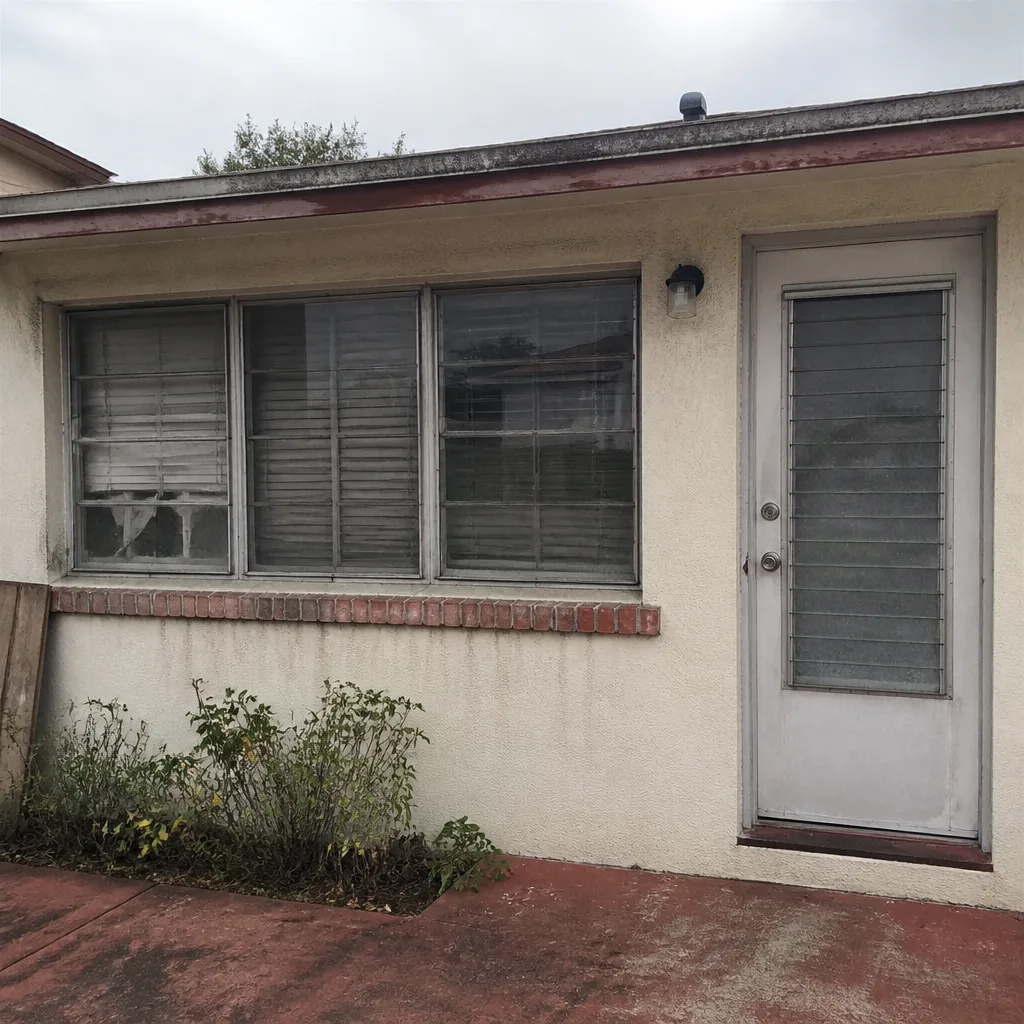 Before
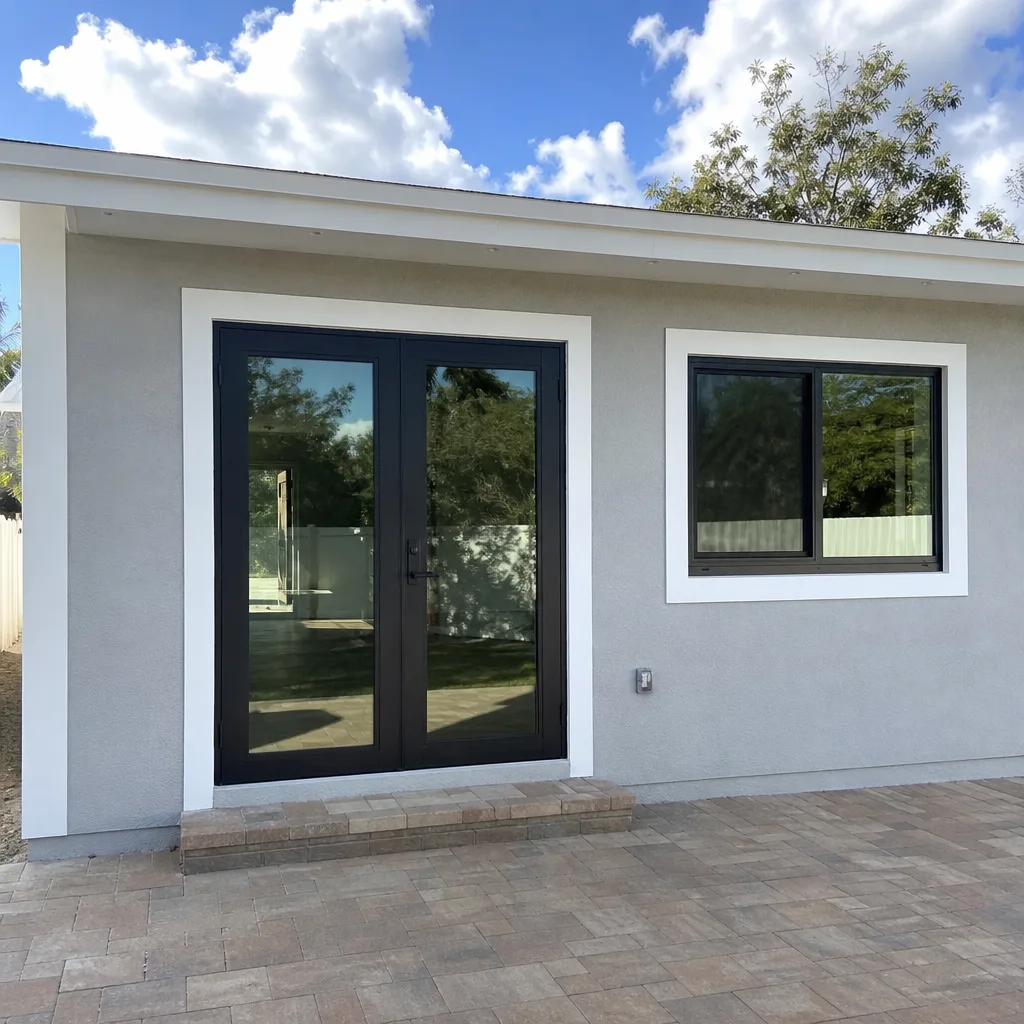 After
After Before
 After
After Before
 After
AfterSeasonal Windows & Doors Care for Opa-locka: Year-Round Homeowner’s Guide
The wet season in South Florida delivers roughly 75% of annual rainfall in five months, from June through October. In Opa-locka, that concentration of moisture creates a predictable cycle of hardware corrosion, sealant degradation, and weep-channel blockage that most national maintenance guides ignore entirely. This guide is written to the actual climate calendar Opa-locka homeowners live with: the pre-wet preparation window in May, the overlapping hurricane season, the dry-season recovery from November through April, and the hardware adjustments required when thermal expansion shifts multi-point locking systems across those temperature swings. What you’ll find below is a maintenance schedule built to the South Florida rhythm, not a northern four-season template with the city name swapped in. For related reading, see our more guides & resources.
Quick Answer
Seasonal window and door care in Opa-locka means preparing for concentrated wet-season moisture from May through October, documenting condition before hurricane season, and addressing UV and thermal-expansion wear during the dry months from November through April. The critical tasks are weep-hole clearing, glazing tape inspection, hardware lubrication with products safe for impact-rated frames, and annual multi-point lock alignment checks. Skip the calendar-based “spring cleaning” approach; the damage pattern here follows rainfall and storm frequency, not temperature change. For a detailed task list, download our Window Installation Maintenance Checklist for Opa-locka Homeowners.
Table of Contents

- Pre-Wet-Season Preparation: What to Complete by Memorial Day
- Hurricane Prep Protocol for Impact Windows and Doors
- Post-Storm Documentation: Evidence for Insurance and Warranty
- Dry-Season Maintenance: UV, Screens, and Weatherstripping
- Annual Hardware Adjustment on Multi-Point Locking Doors
- Product-Specific Care for Common Opa-locka Installations
- Common Mistakes to Avoid
- When to Call a Professional
- Frequently Asked Questions
 Before
 After
AfterPre-Wet-Season Preparation: What to Complete by Memorial Day
By late May, the daily convection pattern that defines South Florida’s wet season is already building. In Opa-locka, afternoon thunderstorms arrive with enough regularity that any window or door maintenance should be complete before June 1st. The tasks below address the three failure modes we document most often in wet-season service calls: water intrusion from blocked drainage, air and water penetration from degraded glazing tape, and hardware seizure from corrosion.
Weep Hole Clearing
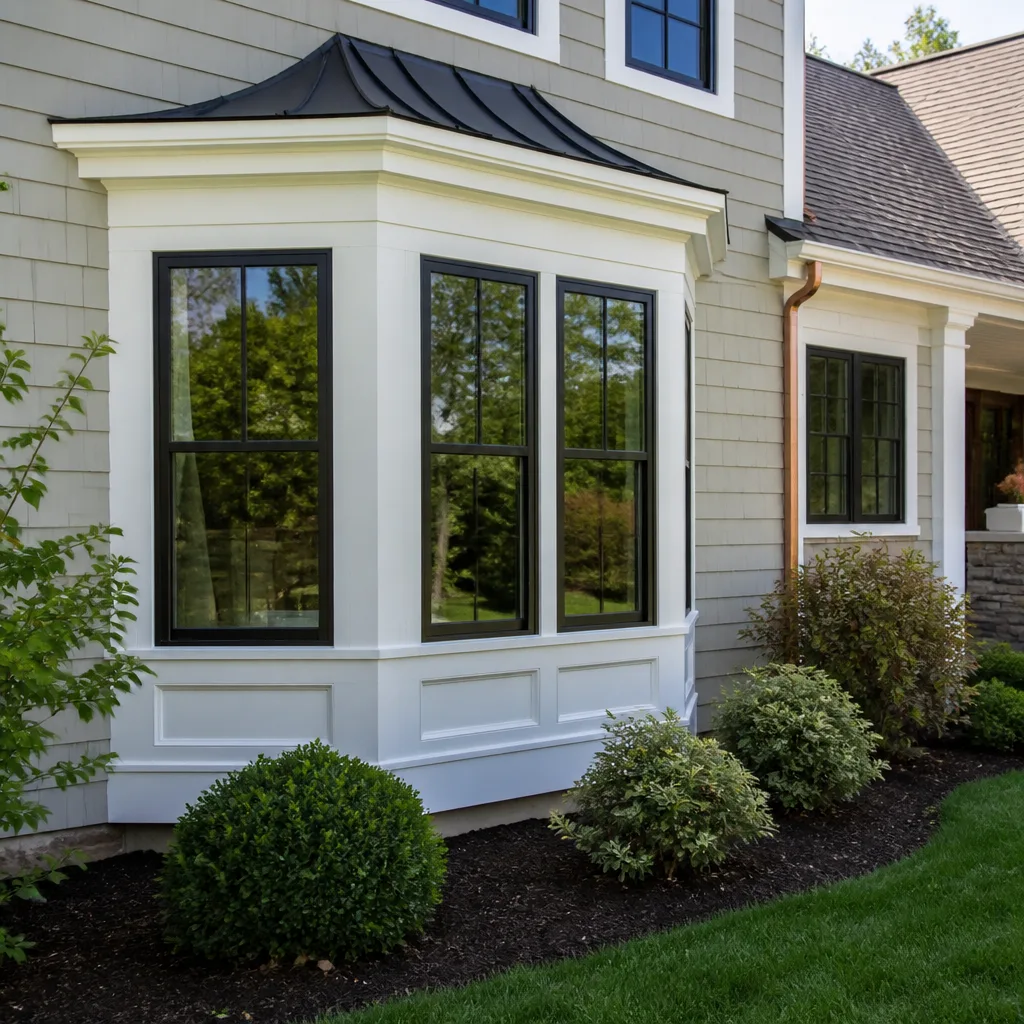
Impact-rated windows and sliding glass doors manufactured by PGT, CGI, and ECO Window Systems include weep holes, small drainage channels at the sill that allow water entering the track or frame to exit to the exterior. When these clog with pollen, insect debris, or mineral deposits from evaporated water, water backs into the track and eventually into the wall cavity.
Clear weep holes with a pipe cleaner or compressed air. Do not use a wire or drill bit; the channels in modern vinyl and aluminum frames are sized precisely, and enlargement destroys the pressure balance that prevents wind-driven rain from entering. In Opa-locka, where limestone dust from construction and landscaping is common, we find weep holes partially blocked by a cementitious crust that requires gentle mechanical removal. Flush with clean water and confirm drainage with a small pour test.
Glazing Tape and Sealant Inspection
Glazing tape, the compressible gasket between the glass and the frame, degrades from UV exposure and ozone concentration. In Opa-locka, the UV index exceeds 9 for more than 200 days annually, accelerating the hardening and shrinkage of butyl-based tapes. Inspect the tape visually for cracking, displacement, or gaps where the glass meets the frame. On impact-rated units, do not attempt to replace glazing tape yourself; the structural silicone and tape assembly is part of the missile-impact certification, and field modification voids the rating.
Perimeter sealant, the bead between the frame and the wall, is homeowner-serviceable. Look for separation, bubbling, or areas where the sealant has pulled away from either surface. In our experience, south- and west-facing elevations in Opa-locka show sealant degradation 18 to 24 months faster than shaded north faces. Use a neutral-cure silicone compatible with your frame material; acid-cure products corrode aluminum and are incompatible with the painted finishes on most impact frames.
Hardware Lubrication Schedule
Locking mechanisms, hinges, and rollers require lubrication before the wet season begins. The critical specification: use a product that does not attract particulate. In Opa-locka’s environment, standard WD-40 or oil-based lubricants become a paste of dust and grit within weeks.
We specify a dry PTFE (Teflon) spray or a silicone-based lubricant without petroleum distillates. Apply to locking cams, hinge pins, and roller bearings. Operate the mechanism through several cycles to distribute. For multi-point locking doors, lubricate each locking point individually; a single dry cam can create enough resistance to misalign the entire system.
On coastal properties within two miles of Biscayne Bay, we see accelerated corrosion on stainless steel hardware from salt-air deposition. These installations benefit from a mid-season inspection in August, when the combination of heat, humidity, and salt load is at maximum.
Hurricane Prep Protocol for Impact Windows and Doors
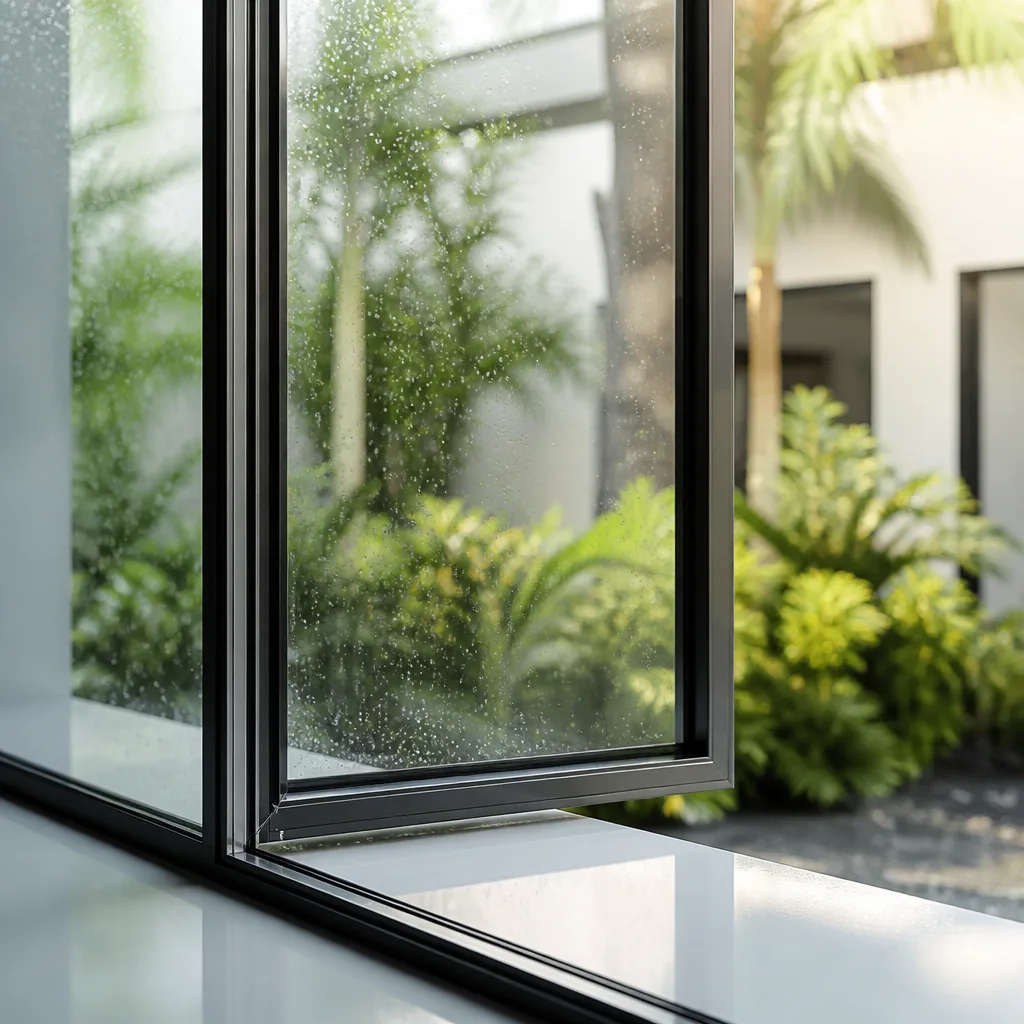
Impact-rated windows and doors installed under Florida Building Code TAS 201, 202, and 203 standards do not require shutters. That is the selling point. But “no shutters needed” is not the same as “no preparation needed.” Before a named storm, impact-rated openings require specific verification to ensure the rating will perform as tested.
The Pre-Storm Checklist
- Verify impact-label legibility. The permanent label identifying the manufacturer, product series, and impact rating must be readable. Faded or painted-over labels complicate post-storm insurance claims and warranty service. Photograph each label annually.
- Inspect frame fasteners. On installations completed before 2017, verify that exposed fasteners show no corrosion or backing-out. Post-Irma inspections in Opa-locka revealed fastener corrosion in installations where dissimilar metals (aluminum frames with uncoated steel screws) created galvanic reaction.
- Clear tracks and drainage paths. Sliding door tracks must drain freely; standing water adds mass and creates hydrostatic pressure against the seal. Remove debris from exterior tracks and confirm weep-hole function.
- Test locking engagement. Fully engage all locking points. On multi-point systems, listen for the characteristic sequence of clicks that indicates each cam has seated. A silent point is a failed point.
- Remove or secure interior furnishings. Impact glass is designed to remain in the frame after fracture, but interior blinds, shutters, or heavy drapes can become projectiles if the glazing is compromised.
What Not to Do
Do not apply tape to impact-rated glass. The laminated interlayer (typically SentryGlas or PVB) is the structural element; tape adds no strength and leaves adhesive residue that attracts particulate. Do not prop or wedge sliding doors “open slightly” for pressure relief; this bypasses the design pressure rating and voids warranty coverage. Do not trust “hurricane proof” language from any source; the correct term is “impact-rated to FBC TAS 201/202/203,” and the label proves it.
For homeowners with mixed installations, some impact-rated and some non-rated, the preparation protocol differs by opening. We maintain records for every window installation in Opa-locka we’ve completed since 2012, including product series and rating status. If you did not receive a documented photo record of your installation, you do not have verified evidence of your protection level.
Post-Storm Documentation: Evidence for Insurance and Warranty
The period immediately after a tropical storm or hurricane passage is when documentation quality determines whether a claim is paid, denied, or delayed. Sightline’s Haven Standard requires photo documentation on every job; we extend that discipline to post-storm inspection.
What to Photograph
- Each opening from the exterior, showing frame, glass, and surrounding wall condition
- Each impact label, with legible text
- Any water intrusion evidence: staining, swelling, or active moisture
- Hardware condition: corrosion, deformation, or operational failure
- Frame fastener heads, where visible
- Perimeter sealant condition, noting any separation or breach
- Interior finishes adjacent to each opening, to establish pre-existing condition baseline
Photograph with date and time enabled, or use a timestamp app. Store images in cloud storage immediately; local device storage fails when you need it most.
Storm Damage vs. Pre-Existing Wear
Insurance adjusters and warranty representatives distinguish between damage caused by a specific storm event and wear that predates it. The distinction matters for coverage determination.
Storm damage typically presents as: glass fracture with impact point visible; frame deformation from pressure differential; fastener failure or pull-out; sealant separation in a continuous pattern corresponding to wind direction; water intrusion correlated with a specific storm event.
Pre-existing wear typically presents as: uniform sealant degradation around the entire perimeter; isolated hardware corrosion without storm correlation; glass fogging from seal failure (insulated glass units); operational wear from lack of maintenance.
The documented photo record from installation, maintained under Sightline’s Haven Standard, provides the baseline for this determination. Without it, the homeowner bears the burden of proving pre-storm condition. We provide every customer the measured survey they keep, the written scope, and the photo record; these three documents together establish condition at completion.
For window replacement in Opa-locka following storm damage, we offer free second opinion on any written estimate from another contractor. Bring the competitor’s quote and your documentation; we will review both at no charge.
Dry-Season Maintenance: UV, Screens, and Weatherstripping
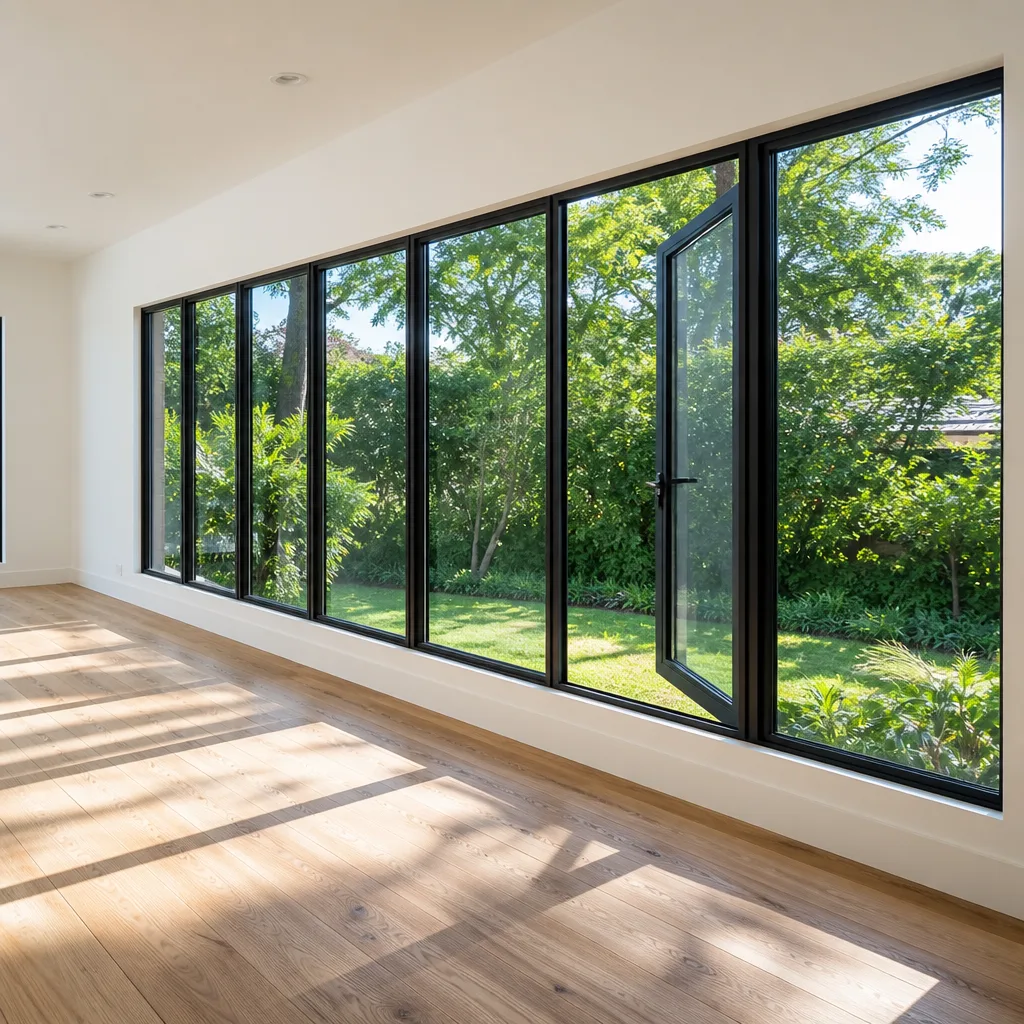
From November through April, Opa-locka’s climate shifts to low humidity, reduced rainfall, and sustained UV exposure. The average daily UV index in January still exceeds 6, enough to degrade polymers and fade finishes. This is the maintenance window for tasks that require dry conditions for proper curing and adhesion.
UV Sealant Inspection
Exterior sealant applied during wet season may not cure properly if rain interrupts the skin-forming period. Dry-season application ensures full cure. Inspect perimeter sealant on all elevations; south and west faces show degradation first. Remove failed sealant with a utility knife, clean the joint with denatured alcohol, and apply new neutral-cure silicone in a continuous bead with proper tooling.
On installations with factory-applied frame coatings (powder coat, Kynar, or anodized finish), inspect for chalking or color shift. These are indicators of coating failure that precede substrate corrosion. Document with photography; coating warranty claims require evidence of failure pattern.
Screen Re-Tensioning
Fiberglass and aluminum screen mesh loosens from thermal cycling and wind flexure. Loose screen does not seal against insects and accelerates frame wear from vibration. Remove the screen frame, lay it flat, and roll the spline into a tighter channel. If the mesh is torn or the spline is brittle, replace both. In Opa-locka, we see screen damage from iguana activity on properties with mature mango and avocado trees; pet-resistant screen from ViewLux or heavy-duty aluminum mesh may be warranted.
Threshold Weatherstrip Replacement
The compression seal at the door threshold takes a set from sustained compression during the wet season, when doors remain closed for air conditioning. By dry season, the seal no longer recovers fully, and light infiltration occurs. Replacement intervals vary by traffic: primary entry doors every 18 to 24 months, secondary doors every 36 to 48 months. Use OEM-compatible weatherstrip; generic replacement often has incorrect compression force and accelerates threshold wear.
For door installation in Opa-locka completed by Sightline, we specify the threshold and weatherstrip by manufacturer and series in the written scope. The replacement part number is documented; order the same part, not a “universal” substitute.
Annual Hardware Adjustment on Multi-Point Locking Doors
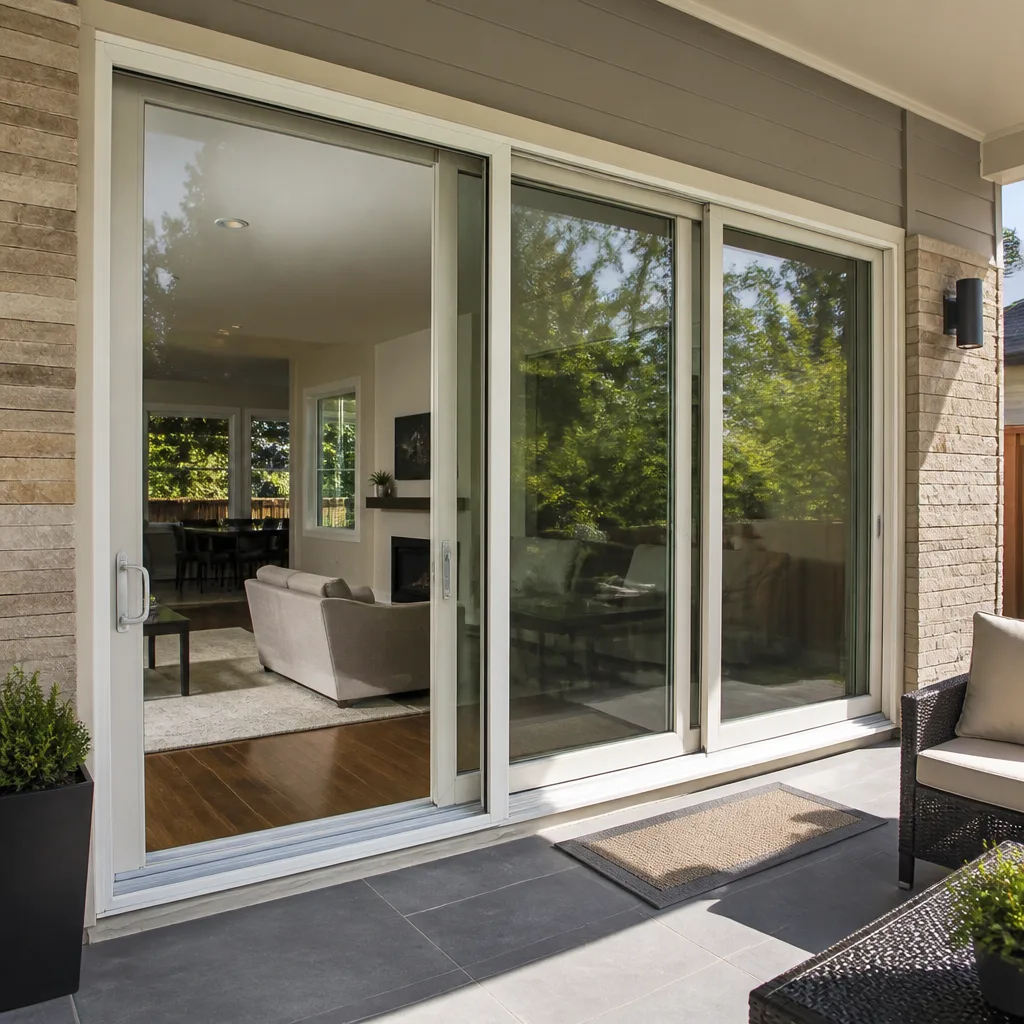
Multi-point locking systems, standard on Therma-Tru entry doors and many sliding door systems from PGT and CGI, secure the door at multiple points along the jamb rather than a single deadbolt. The alignment of these systems shifts measurably across South Florida’s temperature range, from overnight lows near 55°F in January to afternoon highs near 92°F in August.
Why Thermal Expansion Matters
Aluminum frames expand approximately 0.000013 inches per inch per degree Fahrenheit. A 96-inch sliding door frame experiences roughly 0.046 inches of length change across a 37°F annual temperature swing. That 3/64-inch movement is enough to misalign locking cams with their strikes, creating binding, premature wear, and eventual failure to engage.
Wood and composite frames move differently, primarily from moisture content change rather than temperature. The direction of movement is opposite: aluminum expands in heat, wood swells in humidity. In Opa-locka’s climate, aluminum frames are tightest in summer, wood frames in the wet season.
Adjustment Procedure
- Check engagement sequence. Close the door and operate the handle. You should hear or feel each locking point engage in sequence: typically the deadbolt or hook first, then cams top and bottom. A silent point indicates misalignment.
- Inspect strike plates. Look for wear marks, metal transfer, or deformation. These indicate contact without proper engagement and require strike adjustment or replacement.
- Adjust keeper position. Most multi-point systems have slotted keeper screws that allow 1/8 to 3/16 inch of adjustment. Loosen, reposition for full cam engagement, and retorque. Do not overtighten; stripped keeper screws require jamb repair.
- Lubricate and cycle. Apply dry PTFE lubricant to each cam and cycle the mechanism 10 times to distribute.
- Verify with pressure test. Close and lock the door. Apply moderate pressure to the handle side; there should be no rattling or visible separation at any locking point.
This adjustment is best performed in moderate temperature conditions, when the frame is near its annual midpoint. In Opa-locka, late November or early December is ideal: post-wet-season, pre-cold-front, with ambient temperatures near 75°F.
We document hardware adjustment in our service records, including the torque specification for each keeper screw and the engagement sequence observed. This documentation becomes part of the evidence file for any future warranty or insurance claim.
Product-Specific Care for Common Opa-locka Installations
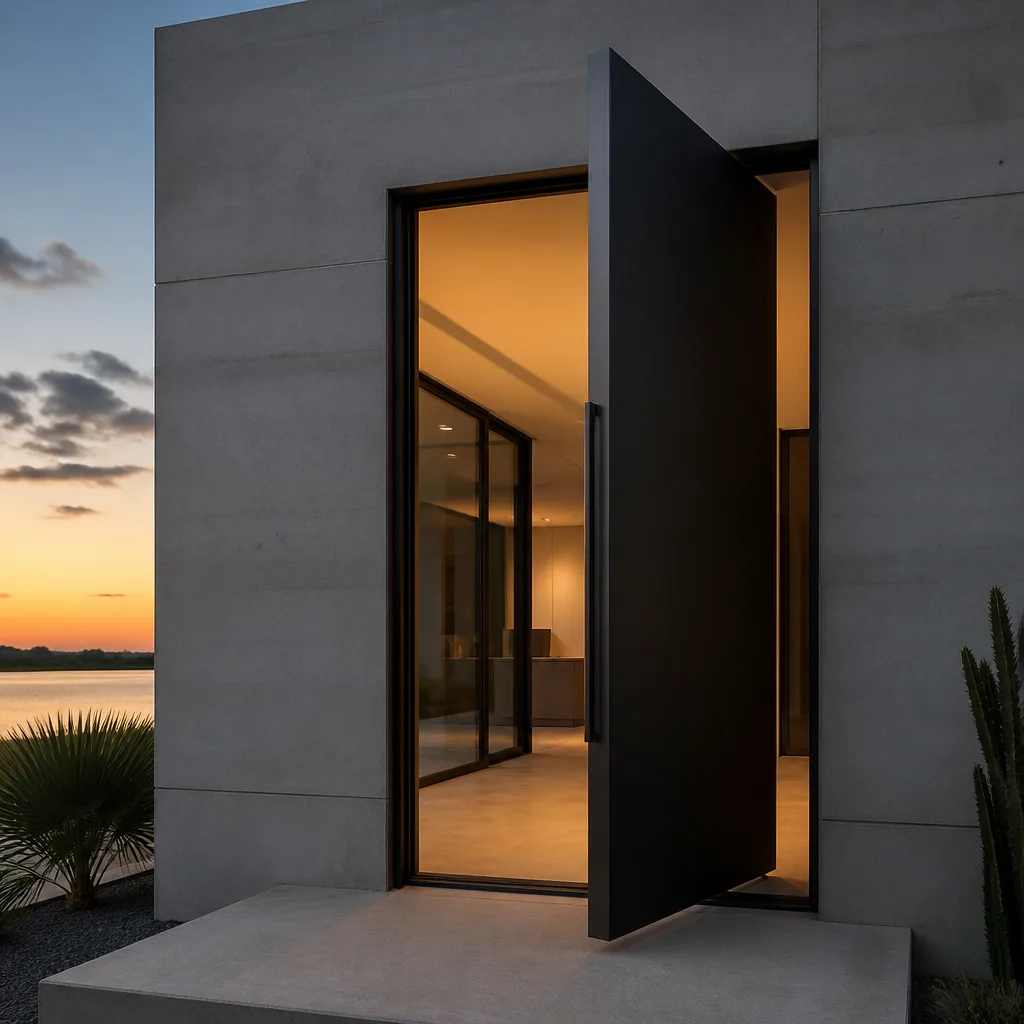
Opa-locka’s housing stock includes mid-century construction, 1980s-1990s subdivisions, and recent infill development. The window and door products in service reflect that range, from original single-pane aluminum to modern impact-rated systems. The care requirements differ by product generation and manufacturer.
Impact-Rated Vinyl and Aluminum Frames (PGT, CGI, CWS, ECO Window Systems)
These products dominate current installations and require the maintenance protocol described above. One Opa-locka-specific note: the limestone base and fill common in local construction creates alkaline dust that etches anodized aluminum if left in contact with moisture. Rinse exterior frames quarterly during wet season; do not use acidic cleaners that attack the finish.
Original Single-Pane Aluminum (Pre-1992 Construction)
Windows in Opa-locka’s older stock, including properties near the historic district and along NW 27th Avenue corridor, often retain original single-pane clear glass in mill-finish aluminum frames. These have no weep system; water management depends on sloped sills and gravity. Maintenance is limited: keep tracks clear, ensure positive drainage away from the wall, and plan for replacement rather than restoration. The energy performance and storm protection of these units does not meet current code for replacement; Sightline Windows & Doors Opa-locka home consultations include code-compliance review for any replacement project.
Insulated Glass Units with Low-E Coating
Mr-Glass and ViewLux products with Low-E coatings require specific care. The coating surface is interior to the sealed unit and not accessible, but edge seals are vulnerable. Inspect for fogging between panes, which indicates seal failure and argon loss. In Opa-locka’s high-humidity environment, seal failure accelerates once it begins; address within one wet season to prevent frame corrosion from trapped moisture.
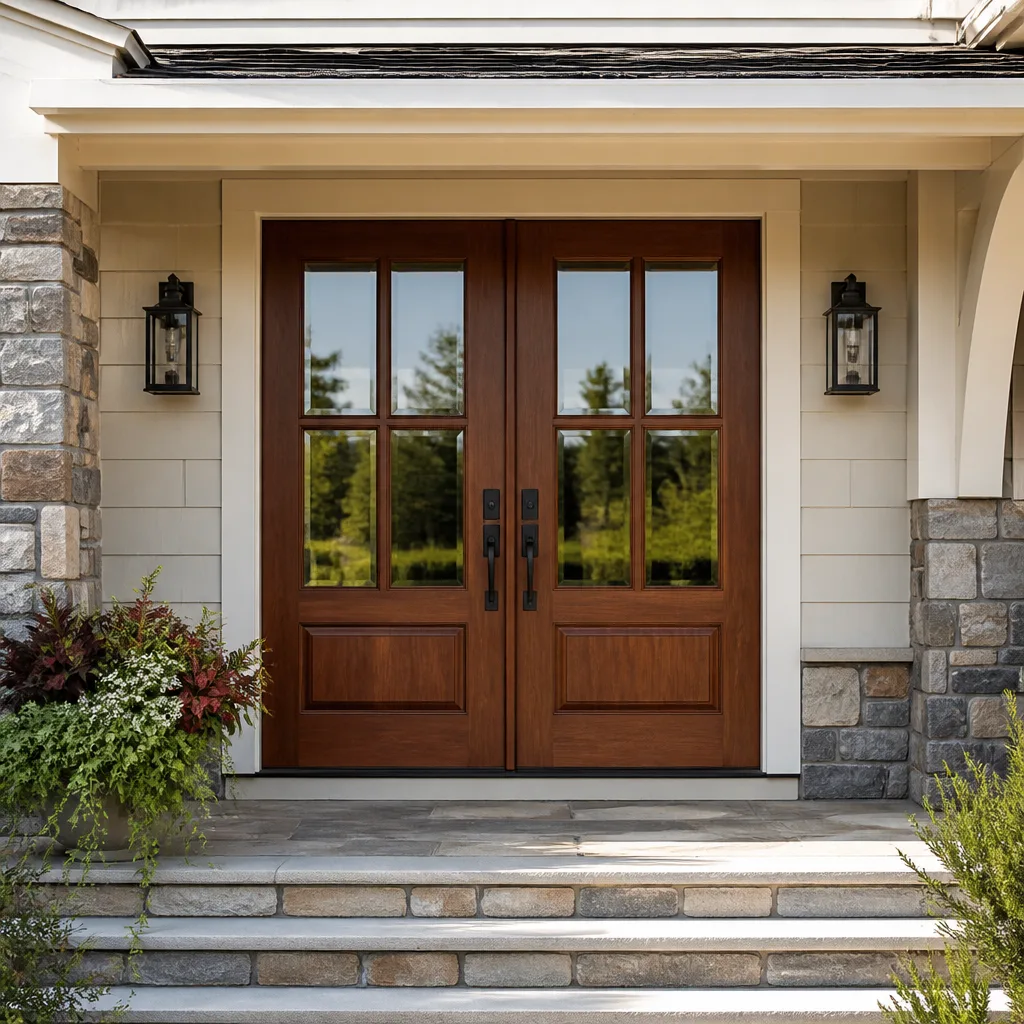
Therma-Tru Entry Systems
Fiberglass entry doors with composite frames resist the moisture absorption that damages wood doors in South Florida. Maintenance focuses on finish renewal: the factory-applied stain or paint requires refresh every 5 to 7 years in full sun, 8 to 10 years in protected locations. The multi-point locking hardware requires the annual adjustment described above. Threshold drainage must remain clear; these systems include concealed weep channels that clog with the same debris as window systems.
Common Mistakes to Avoid
- Using oil-based lubricants on impact-rated hardware. These attract dust and create abrasive paste that wears cams and hinges prematurely. The residue also degrades the polymer components in modern locking systems.
- Pressure-washing window and door frames directly. High-pressure water forces past weatherstrip and into wall cavities. It also drives water into weep holes faster than they can drain, creating back-pressure. Use low-pressure rinse and soft brush instead.
- Ignoring the dry season for sealant work. Wet-season sealant application often fails to cure before rain exposure. The result is wash-out, poor adhesion, and a repair that looks correct but seals nothing.
- Assuming impact-rated means maintenance-free. The impact rating addresses missile impact and pressure cycling, not corrosion resistance, hardware wear, or sealant longevity. These components require the same maintenance as non-rated products.
- Documenting only after damage occurs. Insurance adjusters and warranty representatives require pre-damage condition evidence. Photograph annually, not after the storm.
- Using generic replacement parts on warrantied products. Manufacturer warranties require OEM-compatible components. Generic weatherstrip, hardware, or sealant can void coverage without improving performance.
- Scheduling multi-point lock adjustment in summer. Adjusting at temperature extremes sets alignment for that extreme, not for the annual range. Mid-range adjustment in late fall provides optimal engagement across the full cycle.
When to Call a Professional
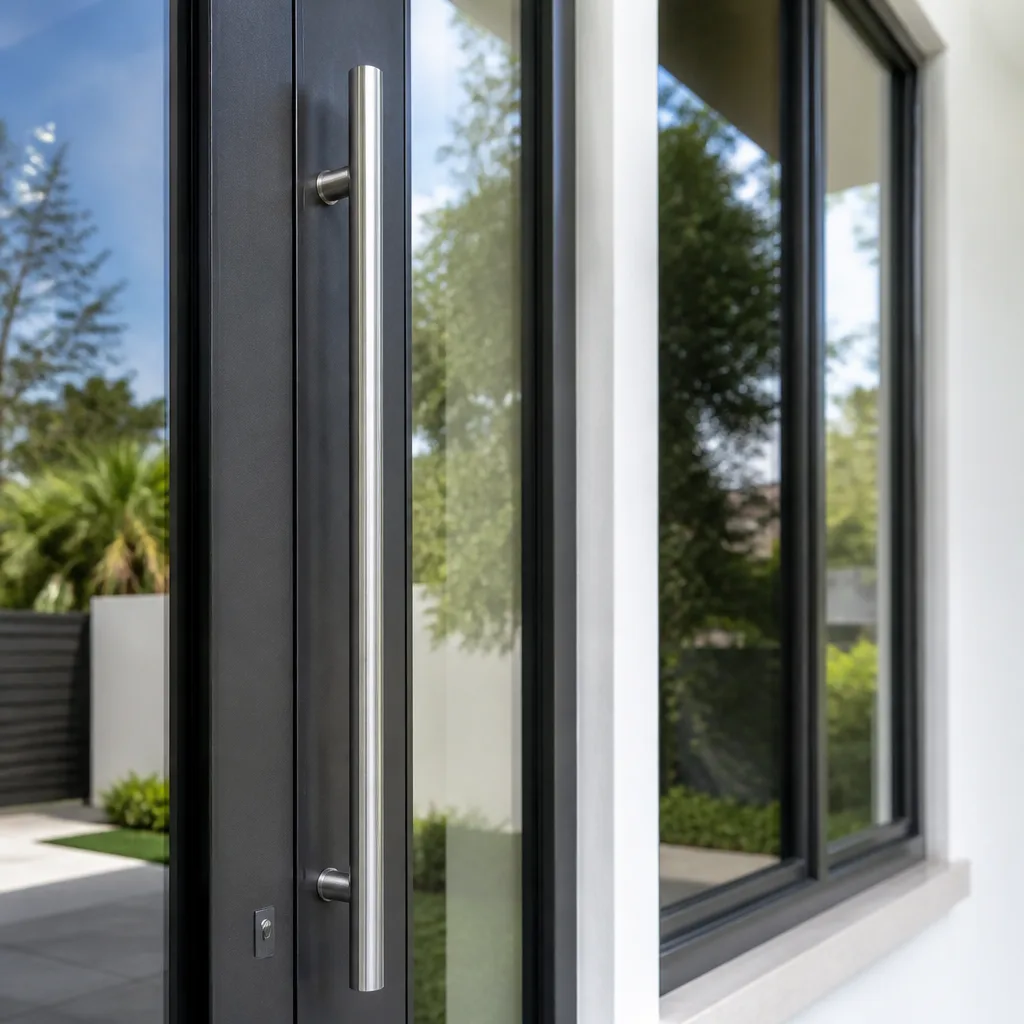
Some conditions indicate system failure rather than maintenance need. Call for professional evaluation if you observe: glass fogging between panes in insulated units; frame deformation, cracking, or separation from the wall; water intrusion that recurs after weep-hole clearing and sealant inspection; hardware that binds or fails to engage after lubrication and adjustment; impact glass with visible crack or delamination of the interlayer; or any condition where the impact label is illegible or missing.
Sightline Windows & Doors Opa-locka offers free estimates in Opa-locka. Every engagement begins with a measured survey you keep, and the written quote cannot differ from that document. Our technicians are background-checked, uniformed, and identified by license number before arrival. Call (786) 671-8642 to schedule your free estimate.
Frequently Asked Questions
Professional seasonal maintenance for a typical 3-bedroom home in Opa-locka ranges from $180 to $340 for inspection, cleaning, lubrication, and minor adjustment. See our Windows & Doors Cost Breakdown: The Opa-locka Homeowner’s Reference for 2026 for fuller pricing context. Sealant replacement adds $4 to $8 per linear foot of perimeter joint. Hardware replacement, screen re-meshing, or weatherstrip replacement are priced by component after inspection. Call (786) 671-8642 for an exact quote; estimates are free.
Homeowners can complete weep-hole clearing, basic lubrication, and visual inspection safely. Sealant replacement, hardware adjustment on multi-point systems, and any work on impact-rated glazing assemblies should be performed by a trained technician to preserve warranty and rating certification. The documented photo record that Sightline provides with professional service also creates evidence for future insurance claims. Call (786) 671-8642 to discuss what level of service matches your comfort and your product warranty requirements.
Inspect impact windows twice annually: before wet season (late May) and after hurricane season (late November). Annual professional inspection is recommended for coastal properties within two miles of salt water, where corrosion accelerates. Installations completed before 2017, when Florida Building Code requirements increased, merit particular attention to fastener and frame condition.
No. Haven Clause 1 of the Sightline Standard requires that the written price precede any work. The measurement and the quote are the same document. If inspection reveals additional needs, we document them, provide a revised written scope, and obtain your authorization before proceeding. The price does not change after work begins.
Routine maintenance, sealant replacement, and hardware adjustment do not require permits. Replacement of windows or doors, or modification of structural openings, requires permits from the City of Opa-locka Building Department and compliance with Miami-Dade County product approval requirements for impact-rated products. For details, see Windows & Doors Permits, Codes & Inspections in FL: What You Need to Know. Sightline pulls all required permits and schedules inspections as part of any replacement project; the permit status and inspection results are documented in your project file.
Verify the permanent impact label on each unit: manufacturer name, product series, and Florida Product Approval or Miami-Dade County Notice of Acceptance number. The label must be legible and intact. If the label is painted over, faded, or missing, contact the manufacturer or your installer for verification. Sightline maintains installation records for every job since 2012, including product series and approval numbers. Call (786) 671-8642 if you need documentation assistance.
The Bottom Line

Opa-locka’s climate demands a maintenance calendar aligned to wet season, hurricane season, and dry season, not to a four-season template. The critical tasks are concentrated: pre-wet preparation in May, storm verification before named systems, documentation immediately after, and UV and hardware recovery from November through April. Impact-rated products reduce storm vulnerability but do not eliminate maintenance responsibility. The homeowners who avoid costly failure are those who treat the maintenance schedule with the same discipline they apply to insurance renewal and tax preparation. Document everything, use products specified for your frame material, and adjust multi-point hardware at the annual temperature midpoint, not at the extremes.
Written by Sonia Raman, Owner at Sightline Windows & Doors Opa-locka, serving Opa-locka since 2012.